 Know My Voice®
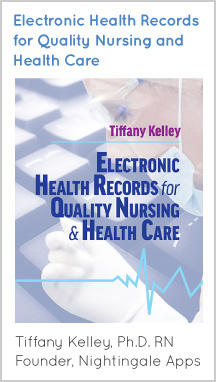
Promoting patient-provider relationships and patient engagement in one’s own health care delivery are two topics that often come up for current discussion. I believe both are necessary for quality patient health outcomes. However, establishing a patient-provider relationship and engaging the patient are both areas that require continuous efforts from the providers and the patients. We as health care professionals are responsible for educating patients and their families about the patient’s health condition. Yet, the patient (and family) is also responsible for ensuring an understanding of his or her health condition, as well as asking questions to clarify the disseminated information. Read more
5 Things Worth the Investment: Apple Edition
July 29, 2026
If you scrolled on any social platform over the last week or two, you may have seen a trend emerging on: “5 things worth the money”. People are sharing their 5 things they find worth the investment for a variety of areas in life.
I decided to offer my 5 things worth the investment focused on work and life technology needs. I am an Apple user and there are several products and services that I depend on each day.
Below are my top 5 things worth the investment: Apple Edition
(ps… this is not an ad, just me sharing my preferences)
1.MacBook Pro (over Air):
The Air is lighter and that is an advantage. However, I often feel limited in what I can accomplish with the Air in terms of connecting to other devices. I prefer the Pro. The Pro has more ports to connect devices such as display monitors, charging cables, headphones and more.
2. iCloud Drive:
Sync your files to iCloud and pay for the extra storage. Keep everything in one location that is accessible from any Apple device. Nothing should be kept on your hard drive that is not also backed up somewhere else. The Cloud allows for greater flexibility than an external hard drive. (However, both are valuable if you want a 3rd back up).
3. Apple Care:
Apple Care is similar to insurance but for your tech needs. You likely have a deductible for each item that needs assistance with some things covered at no cost. A check in at the Genius Bar and evaluation will tell you what you need. In the last few months, I have needed Apple Care for both my MacBook Pro and one of my iPhones. I recently learned that you can bundle several items for a condensed price each month.
4. Air Tags:
I love these little discs! How many times have you traveled and wondered:
- “What do I do if my bag doesn’t make it off the baggage claim belt?”
or
- “Where did I leave my keys?”
or
- “What floor did I park my car on (after entering a massive parking lot)?”
Well, now I have an Air Tag in my car, attached to my keychain and also in the car. When I need to, I can go to “Find My” on my iPhone and search for the item (or device). These are well worth the expense.
(I would love to see these also applied to hospital equipment when nurses are looking for pumps, poles, wheelchairs, tubes for the tube system and more).
5. iPhone: Choose your preferred model
I am a double iPhone user with a 13 Pro Max and a 17 Pro Max. However, I have had many of the iPhones over the years. I do not buy a new one each year but do upgrade after a few years as the software ages out and the camera usually gets better.
There are now multiple models and different sizes on the iPhone. The integration with the apps and my MacBook Pro, iCloud Drive, Find My, Air Tags and more make it all an integrated system.
There are a few other Apple products I depend on each day, but these are my top 5! (There are also a couple I have but never really adopted however those items are much fewer in number).
Sincerely,
~ Dr. Tiffany Kelley PhD MBA RN NI-BC FNAP FAAN